

Chinese grammar looks nothing like English on the surface — no verb tenses, no “is/are/was”, and numbers that need a special word before every noun.
And yet, at its core, Chinese follows a very logical structure.
The same patterns appear again and again, and once your child gets a feel for them, forming a correct sentence becomes far less of a guessing game.
In this guide, we break down the rules, word order, and common mistakes so you can support your child with more clarity and confidence!
Quick Summary for Parents
Chinese grammar follows clear, repeatable patterns. Once your child understands word order, measure words, and key particles, building correct sentences becomes much more manageable.
This guide is organised so you can read it from start to finish or jump straight to what your child needs most. The first half covers the core grammar rules that form the foundation of every sentence, while the second half focuses on practical sentence patterns, examples, and common mistakes to watch out for.
You’ll also find simple, child-friendly tips throughout — especially helpful for children with ADHD, dyslexia, and other learning difficulties, or those who need more structured support.
Core Chinese Grammar Rules

1. Core building blocks and word order
Before we begin, it’s important to understand that Chinese verbs do not change form based on subject (I/you/he) or tense the way English verbs do. Instead, the meaning of the sentence comes mainly from word order, small particles, and time words.
Its basic structure follows subject–verb–object, the same pattern as simple English sentences like “I love you” or “He eats rice.”
For example, 我爱你 (Wǒ ài nǐ) is a Chinese sentence where 我 is the subject, 爱 is the verb, and 你 is the object.
Unlike English, Chinese verbs do not change form based on subject or tense. For example, the verb 去 (qù, “to go”) stays the same whether the subject is 我 (I), 他 (he), or 他们 (they).
- There is no conjugation for past, present, or future.
- There is no distinction between singular and plural forms.
- Instead, time words (like “yesterday,” “today,” “tomorrow”) show when the action happens.
- 我昨天去图书馆。 → I went to the library yesterday.
- 他今天要去图书馆。 → I am going to the library today. / I will go to the library today.
- 他们明天会去图书馆。 → They will go to the library tomorrow.
2. Aspect particles (助词, zhùcí)
Chinese uses aspect particles to show whether an action is completed, experienced before, or still ongoing:
- 了 (le) — completed action or change of state: 我吃了饭 (I have eaten), 天黑了 (It has turned dark).
- 过 (guo) — experienced at least once: 我去过动物园 (I have been to the zoo).
- 着 (zhe) — continuing state: 门开着 (The door is open and stays open).
You can explain these to your child in plain language: “already finished”, “have done before”, and “still happening.”
This is a far easier way to grasp than grammar labels, and it keeps to the correct usage of Chinese grammar.
3. Measure words (量词, liàngcí): The connectors between numbers and nouns
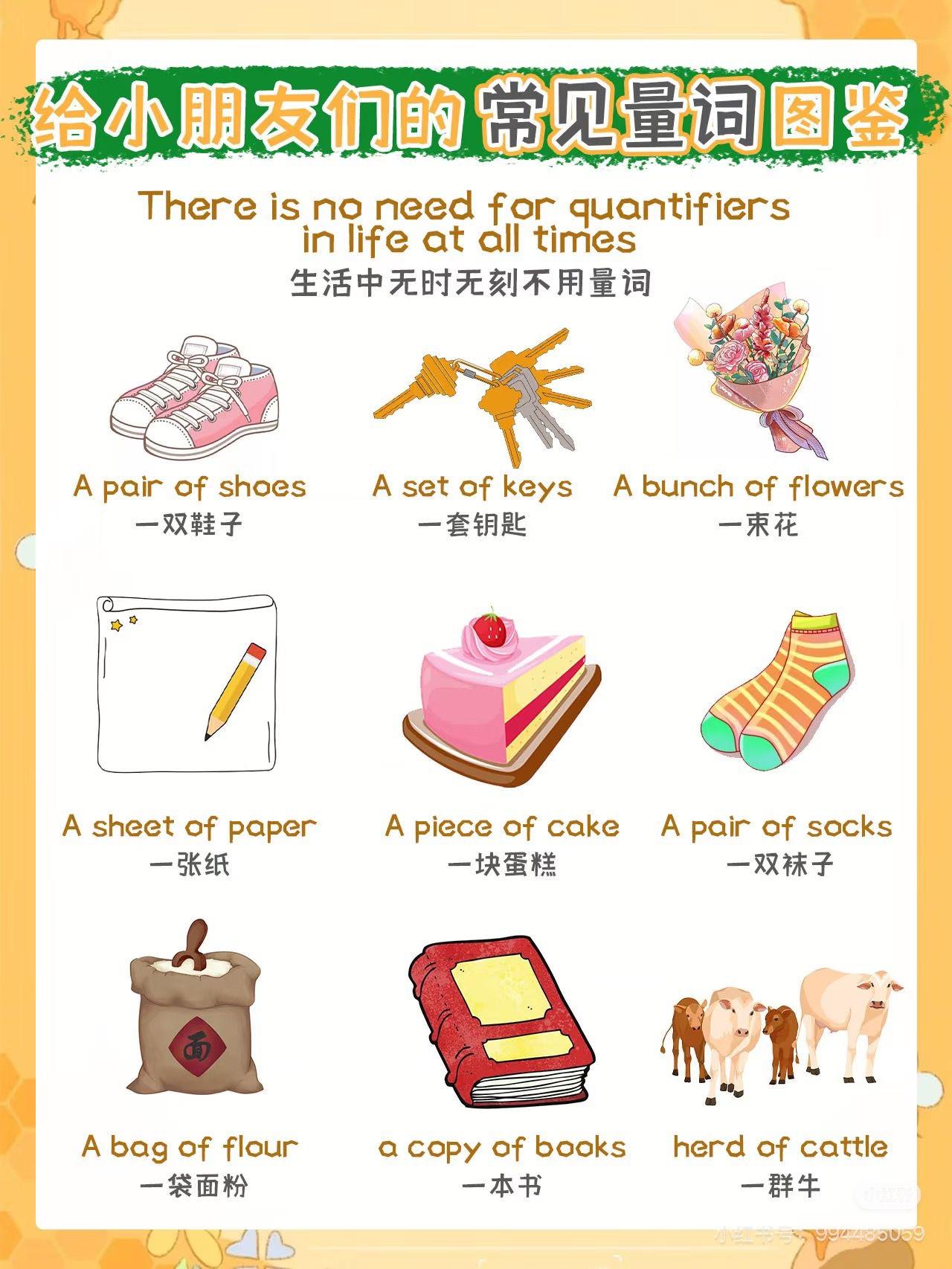
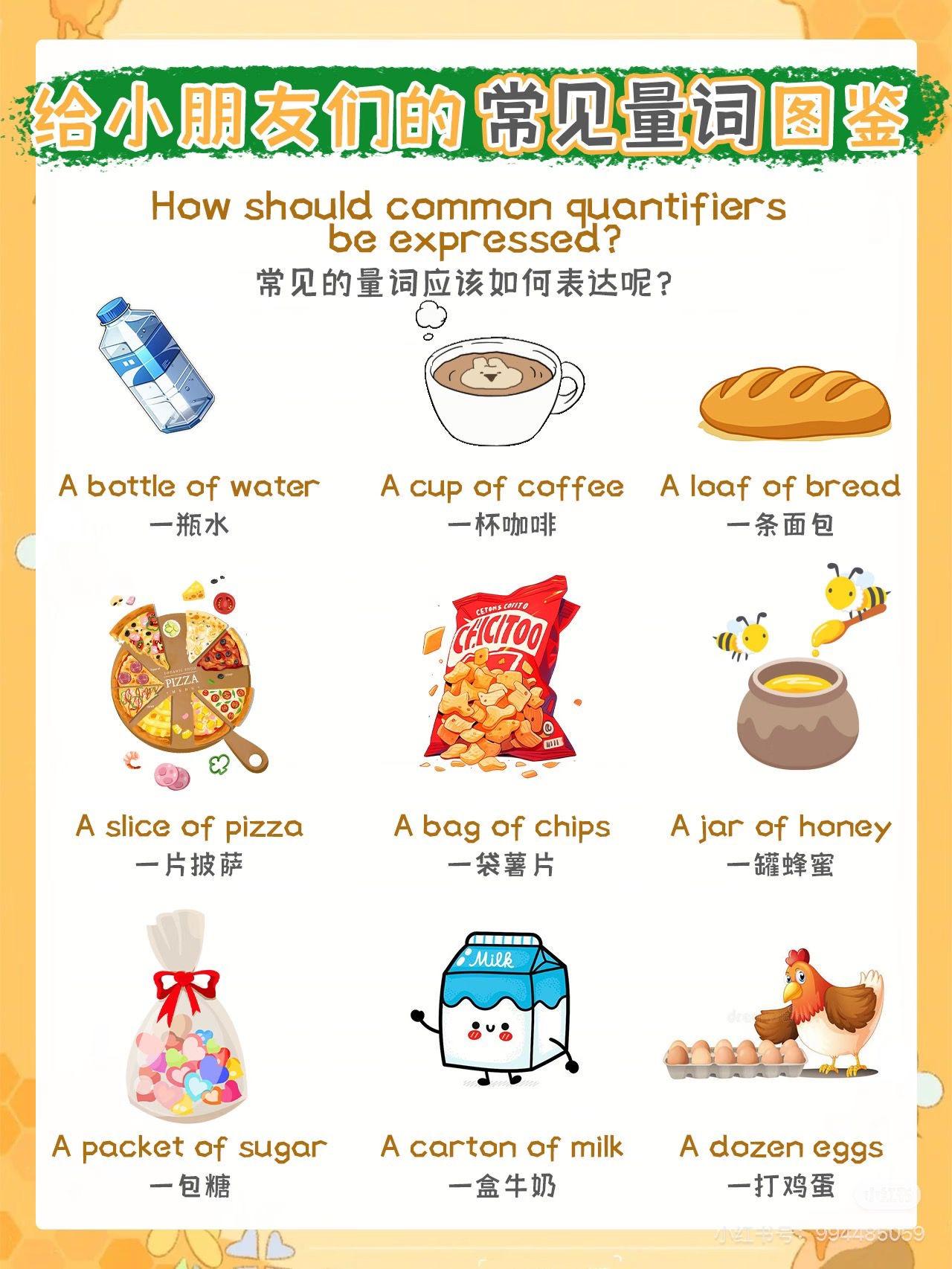
In Chinese grammar, measure words (量词) are one of the most important building blocks of a sentence. Unlike in English language, the phrase “one book” is written as 一本书, “three dogs” is written as 三只狗.
The basic pattern is: number + measure word + noun.
- (i suggest put image so its easier to explain this?? what do u think?
4. Negatives bu and mei
Not all “not” in Chinese can be used the same way.
不 (bù) is used for habits, general truths, and future actions, such as:
- 我不喜欢菜 (I do not like vegetables)
- 他今天不去 (He is not going today)
没/没有 (méi/méiyǒu) is used for past or completed actions and for “do not have”, such as:
- 我没吃早饭 (I did not eat breakfast)
- 我没有铅笔 (I do not have a pencil)
A simple rule for your child: if the sentence is about “didn’t do / haven’t done / don’t have”, use 没. If it is about “don’t / won’t / usually don’t”, use 不.
Word Order Rules That Matter in Chinese Sentence Structure

Chinese sentence structure is remarkably systematic once you see where time, place, and other details belong. If your child learns a few core sentence patterns, they can build many correct Chinese sentences without memorising long grammar rules.
1. The core Chinese sentence template
A helpful template for many everyday sentences is:
WHO (subject) + WHEN (time) + WHERE (place) + HOW (manner) + DO WHAT (verb) + WHAT/WHO (object)
For example, you can build a sentence step by step:
- 我吃饭。Wǒ chī fàn. — I eat.
- 我今天吃饭。Wǒ jīntiān chī fàn. — I eat today.
- 我今天在学校吃饭。Wǒ jīntiān zài xuéxiào chī fàn. — I eat at school today.
This is one of the most useful tools you can teach your child, because the same structure works for many verbs and many situations.
2. Time and place in the sentence
In Chinese, time phrases usually come near the start of the sentence, and place phrases usually appear before the verb — not at the end of the sentence, as in English.
A typical pattern is: Subject + Time + Place + Verb + Object
For example:
- 我明天在学校上课。— I will have lessons at school tomorrow.
- 她晚上在家看书。— She reads at home in the evening.
A common mistake is to put time after place, copying English word order (for example, 我在学校明天上课). Remind your child to check “When? Where? What?” in that order.
3. Topic–comment sentences: Putting the topic first
Chinese can also place the topic first (what we want to talk about), then follow it with a comment. This topic–comment structure is very natural in spoken Mandarin:
- 咖啡,我不喝。Kāfēi, wǒ bù hē. – Coffee, I do not drink.
- 这本书,我明天在家看。– This book, I will read at home tomorrow.
Inside the comment, the word order follows the normal subject–time–place–verb–object pattern. Only the topic has moved to the front for emphasis.
4. Linking actions with serial verbs
Chinese often lines up two or more verbs in a row after one subject, without extra linking words like “to” or “and.”
This can be explained to your child as “one subject, two actions”:
- 他回家做作业。Tā huí jiā zuò zuòyè. — He goes home to do homework.
- 我去商场买书。Wǒ qù shāngchǎng mǎi shū. — I go to the mall to buy books.
This structure appears constantly in daily routines, so it’s easy to practise with familiar activities.
5. Asking questions in Chinese
Chinese uses a few simple patterns to turn any statement into a question, without changing the basic word order.
- Yes–no questions with 吗 (ma): Add 吗 at the end of the sentence. 你喜欢数学吗?(Do you like Maths?) The word order of the statement stays exactly the same; only 吗 is added at the end.
- A‑不‑A questions: Repeat the verb with 不 in the middle. 你去不去?(Are you going or not?) This can be turned into a fun, rhythmic practice for children who struggle to sit still.
- Wh‑questions: The question word stays in the same position as the information it replaces. 他在学校学习 → 他在哪里学习?(Where does he study?)
One important rule: don’t add 吗 to a sentence that already has a wh‑question word. 你是谁吗?is incorrect — the question word already does the work.
Basic Sentences Examples for Everyday Practice

Short, clear examples are one of the best ways for children to see how Chinese grammar works in real sentences — especially for learners with attention or reading difficulties.
Everyday sentence frames to use at home
Here are some simple Chinese sentence examples that parents can use as daily “warm‑up” drills:
- 我做作业。→ 我今天在家做作业。Wǒ jīntiān zài jiā zuò zuòyè. — I do homework at home today.
- 他上课。→ 他明天在学校上课。Tā míngtiān zài xuéxiào shàngkè. — He will have class at school tomorrow.
- 你喜欢中文。→ 你喜欢中文吗?Nǐ xǐhuan Zhōngwén ma? — Do you like Chinese?
- 他在学校学习。→ 他在哪里学习?Tā zài nǎlǐ xuéxí? — Where does he study?
Try writing “time” and “place” on cards and letting your child arrange them in the correct order, then read the full sentence aloud. Seeing the structure laid out physically helps children with working‑memory challenges hold the pieces together.
4 Common Grammar Mistakes
Knowing the most common Chinese grammar mistakes helps you spot patterns in your child’s work and guide them calmly. These errors are especially common in children who struggle with working memory, attention, or processing written language, as they tend to drop small words and lose track of word order in longer sentences.
1. Mixing up word order
Putting time and place in the wrong position is one of the most frequent errors in Chinese sentence structure:
- ✘ 我在学校明天上课
- ✔ 我明天在学校上课。
This usually happens when children translate directly from English without thinking about Chinese word order. The “When? Where? What?” checklist gives them a simple way to self‑correct.
2. Using 有 (yǒu) incorrectly
Many Singapore children pick up the habit of placing 有 (yǒu) before verbs and adjectives, influenced by Hokkien and Cantonese patterns common in Singlish — for example, 我有去 instead of 我去了 / 我去过, or 我有高兴 instead of 我很高兴.
In standard Mandarin, 有 means only “to have” or “there is/are,” as in 我有一本书 (I have a book) or 这里有人 (There is someone here). Using it as an auxiliary verb or before an adjective, the way some dialects do, isn’t correct Mandarin and can cost marks in composition and oral assessments.
3. Overusing ge and omitting measure words
It is very common for learners to use 个 for every noun or to leave the measure word out entirely.
Both 三个书 and 三书 are incorrect; the correct form is 三本书.
Use the picture guide in the beginning of this article for common measure words and practise them with familiar objects before introducing new ones.
How to Help Your Child Improve Their Chinese Grammar

Supporting your child in Chinese grammar is not about giving them more worksheets; it is about building confidence through short, repeated practice with clear sentence patterns.
Focus on patterns, not perfection
Instead of drilling many grammar rules at once, choose a few high‑frequency sentence structures and use them in different situations every day.
Swap out one element at a time — change the time word, place, or verb object — while keeping the structure of the sentence the same.
If your child is at the early years stage, a Chinese kindergarten programme that emphasizes spoken patterns and simple sentences can lay exactly the kind of groundwork that makes primary school Chinese far less overwhelming.
Keep practice short, structured, and multi‑sensory
For children with learning difficulties, such as ADHD or dyslexia, 5–10 minute sessions focused on one concept, such as time and place word order, one new measure word, or the difference between 不 and 没, are often far more effective than long lessons.
Try using sentence cards, coloured markers, or movement games so that the structure of the Chinese sentence becomes something children can see and touch, not just hear.
A dedicated, structured primary Chinese programme can give them the consistent practice and guidance that casual home revision often cannot.
Use it in everyday life
There are many natural chances to practise Chinese grammar at the hawker centre, on the MRT, or during homework time.
Ask simple questions in Chinese, encourage short replies, and gently recast incorrect sentences rather than correcting directly.
As your child grows more confident, encourage them to think in Chinese rather than translate from English.
If tones are another area of difficulty for your child, this is a great next step: Mandarin 4 Tones Made Easy: A Step-by-Step Guide to Clearer Chinese Pronunciation.
Support Your Child’s Mandarin Journey With Mandarinstars Learning Centre
If your child finds Chinese grammar confusing, or feels left behind in class, especially with ADHD, dyslexia, autism, or other learning needs, the right learning environment can make all the difference.
Children here learn Mandarin through play‑based, gamified lessons that make sentence patterns, word order, and grammar rules genuinely engaging and memorable.
When you engage Mandarinstars Learning, your child benefits from:
- Specialist support for children with ADHD, autism, dyslexia, and low confidence in Chinese.
- Small, nurturing class sizes where teachers adapt pace, examples, and sentence tasks to each child’s level.
- Play‑ and game‑based activities that turn Chinese grammar, sentence patterns, and measure words (量词) into hands‑on, enjoyable learning.
- A strong focus on real usage, so children learn how to build correct Chinese sentences, not just memorise rules.
- Regular updates for parents on which structures and sentence patterns to reinforce at home.
See how your child can start forming clear, confident Mandarin sentences — without frustration. Contact Us Now

