

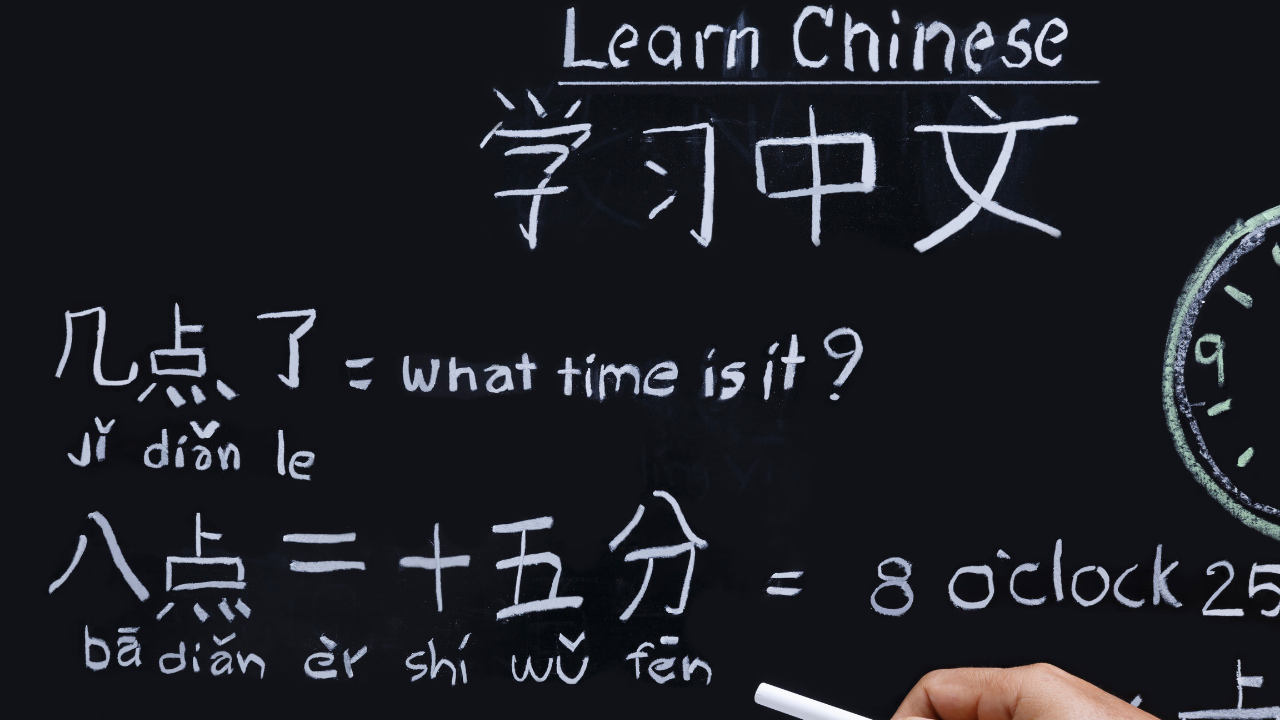
The journey to learning Mandarin language usually begins with a small surprise.
Because Mandarin uses a romanised spelling system called Hanyu Pinyin, many beginners assume that Chinese pronunciation follows the same rules as English. It doesn’t, and that gap is exactly where confusion tends to creep in.
The good news? A handful of core Mandarin pronunciation rules, learned early, can make a real difference!
Getting these right from the start helps children build clearer speech, stronger reading skills, and the kind of confidence that keeps them motivated to learn Mandarin Chinese.
Here are six of the most important Chinese pronunciation rules every beginner should know.
6 Core Pronunciation Rules Every Beginner Should Learn

Rule 1: Pinyin follows its own rules — not English ones
Hànyǔ Pīnyīn (汉语拼音), meaning “Han language sound spelling”, is the official romanisation system for Standard Mandarin. It is used in schools and language programmes in People’s Republic of China and Singapore, and is recognised internationally, including by the United Nations.
Because it uses the same letters as the English alphabet, children often assume the pronunciation works the same way. This is where confusion begins.
What makes Chinese pinyin its own system is the way it is built from two parts: initials (the opening consonant sound) and finals (the vowel sound or ending that follows). Together, these pairs of initials and finals form every syllable in Mandarin.
In pinyin, even familiar-looking vowels can catch beginners off guard: take the vowel sound u, for example. In certain combinations, such as 鱼 (yú – fish), it is pronounced with rounded lips, quite unlike any u sound in English.
That’s why many structured classes use a pinyin chart as a reference, helping children see all the possible combinations at a glance. Once children understand that hanyu pinyin has its own spelling rules, things start to click much faster.
Rule 2: Familiar letters can produce unfamiliar sounds
Once children move past English assumptions, the next step is recognising that many pinyin letters represent sounds that don’t exist in English.
For English speakers, the pronunciation of these initials can feel particularly foreign at first. These letters are grouped into initials (the consonants that open a syllable) and some of them can be particularly tricky.
For example, the initials j, q, x are pronounced with the tongue flat and the lips spread:
- j — a sharp, clipped sound, like a softer “j”: 节 (jié – festival); common combinations include 姐 (jiě – older sister), 叫 (jiào – to call/shout), and 了解 (liǎojiě – to understand)
- q — closer to “ch” but lighter, with lips spread wide: 七 (qī – seven); 切 (qiē – to cut) and 巧 (qiǎo – clever)
- x — a soft, airy hiss with lips stretched outward: 西 (xī – west); 谢 (xiè – thank you) and 小 (xiǎo – small)
On the other hand, the initials z, c, s often catch beginners off guard because they produce sharp, clipped sounds that differ from their English equivalents:
- z — a “dz” sound, like the end of “beds”: 在 (zài – to be at / in)
- c — a sharp “ts” sound, like the end of “cats”: 菜 (cài – vegetable); 错 (cuò – wrong)
- s — sounds similar to English “s”, but crisper and more front-of-mouth: 三 (sān – three)
This is why common syllables are often misread:
- 七 (qī) — this does not sound like “kwee”
- 西 (xī) — this is not pronounced “zee”
- 知 (zhī) — despite looking familiar, the sound is very different from what English readers might expect
A useful group of finals to practise alongside these initials is -ie: 节 (jié), 切 (qiē), and 写 (xiě) all use this same final — making jie, qie, xie a natural set to drill together.
Similarly, the -ie final appears in words like 铁 (tiě – iron), 捏 (niē – to pinch), and 列 (liè – row) which shows how the same final sounds consistent across different initials.
These six initials feel strange at first, especially for English-speaking children. But with consistent practice and the right guidance, pronouncing them can quickly become second nature.

Rule 3: Correct pronunciation depends on how sounds are formed
Once children can recognise unfamiliar sounds, the next step is learning how to produce them correctly.
In Mandarin, pronunciation depends heavily on tongue and mouth position. Small differences in placement can completely change how a sound comes out.
This is especially true for the retroflex initials — zh, ch, sh, r — where the tongue curls back towards the roof of the mouth. These sounds do not exist in English and need to be physically practised:
- zh: 知 (zhī – to know); 站 (zhàn – station)
- ch: 吃 (chī – to eat); 唱 (chàng – to sing)
- sh: 是 (shì – is / to be); 时间 (shíjiān – time)
- r: 人 (rén – person); the tongue curls back for a soft buzz — 热 (rè – hot)
These combinations of initials and finals form many of the Chinese characters children see in class every day.
A great way to hear the difference between the two groups is to practise combinations side by side — for example, gan, kan, han, zan, san, zhan, chan, shan.
If the tongue does not curl back far enough, the sounds come out flat and children rarely notice this on their own. This is where real-time feedback makes a genuine difference.
With guided practice and feedback, children learn to form these sounds properly — and that’s when their pronunciation starts to improve noticeably.
Rule 4: Mandarin is spoken in clear, even syllables
In English, sounds often blend together, and syllables can lose definition within a word.
Mandarin Chinese works differently as it is a syllable-timed language, meaning each syllable is spoken clearly and distinctly, carrying its own sound and weight.
Take these simple everyday phrases:
- 中国 (Zhōngguó – China) = “zhōng” + “guó”, two clear, fully sounded syllables.
- 我爱你 (Wǒ ài nǐ – I love you) = “wǒ” + “ài” + “nǐ”, three syllables, each spoken as its own distinct beat.
Each syllable stands on its own, with no blending between sounds.
And for children who find spelling-based reading in English more challenging, this one-character, one-syllable structure feels much more manageable.
Our dyslexia-friendly Mandarin learning programmes often draw on this feature to build reading confidence in a way that suits different learners.
Rule 5: The same syllable can mean different things depending on tone
Pronunciation alone is not enough to convey meaning — tone also plays a defining role.
In Mandarin, the same pinyin syllable can carry completely different meanings depending on the tone used. Here’s the classic example of “ma”:
- 妈 (mā) – mother
- 麻 (má) – hemp / numb
- 马 (mǎ) – horse
- 骂 (mà) – to scold
Although the spelling is the same in pinyin (“ma”), the tone changes the meaning completely.
This is why tones are a core part of Mandarin pronunciation — they are not an add-on, but part of how meaning is built into every word.
If you would like to understand how tones work in detail, this guide breaks it all down step by step: Mandarin 4 Tones Made Easy: A Step-by-Step Guide to Clearer Chinese Pronunciation.
Rule 6: Listening comes before accurate speaking
Before children can speak Mandarin clearly, they should be able to hear it correctly and repeatedly.
Language learning begins with recognition. When children are exposed to accurate pronunciation over time, their brains begin to map the sounds naturally.
Speaking improves as a result of this exposure, not before it.
This is why consistent listening practice — through guided teaching, repetition, and real examples — is essential for beginners. With enough input, pronunciation becomes more intuitive and less forced.
A Multi-Sensory Way to Reinforce Mandarin Pronunciation
For many children, especially beginners, Mandarin pronunciation becomes much easier to grasp when learning goes beyond just listening and repetition.
To support this, Mandarinstars Learning Centre has developed its own set of physical Hanyu Pinyin flashcards designed for children aged 4 to 8 to reinforce how sounds are recognised, remembered, and produced.
Each card is built around a simple idea: helping children connect sound, symbol, and meaning in a way that feels natural and memorable.
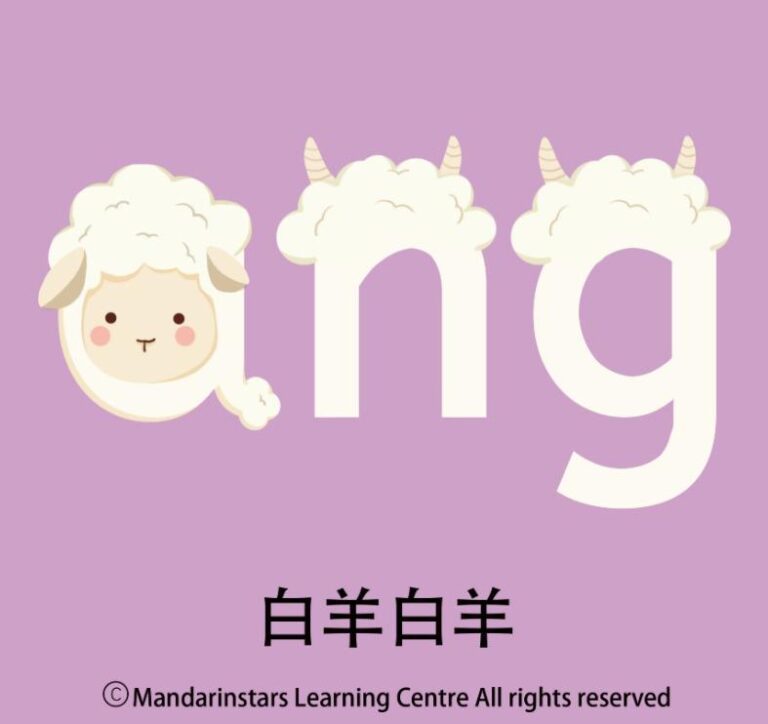
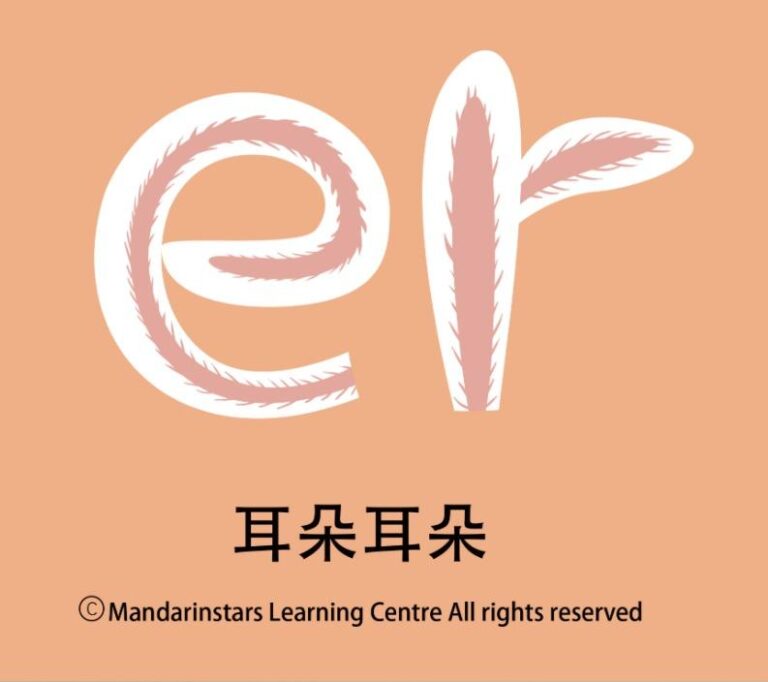
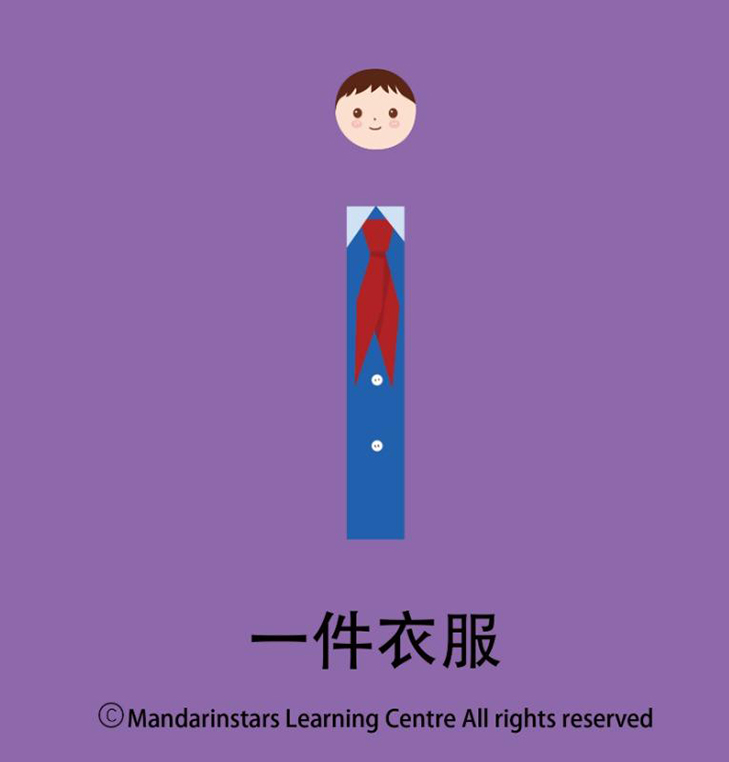
On the front of each card, the pinyin syllable is paired with a short, child-friendly phrase and a visual cue. The illustration is directly integrated into the letter itself, so children associate the shape of the letter with the sound it represents.
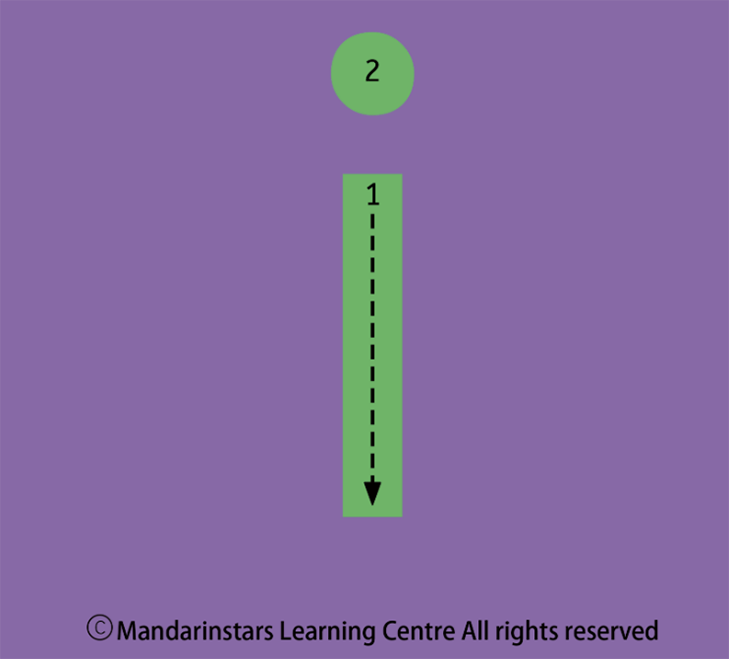
On the back, the printed letter features a textured finish designed for tracing. This adds a physical, tactile element to learning — children can run their fingers along the letter as they practise the sound.

For example, the phrase: 一(yí)件(jiàn)衣(yī)服(fu) which translates to a piece of clothing.
The front of the card is an image of a person wearing a top:
While the back of the card shows the printed letter with a textured surface:
By engaging multiple senses at once, children are more likely to retain unfamiliar sounds and reproduce them with greater accuracy and confidence.
These flashcards are used within Mandarinstars’ Primary 1 classes and Hanyu Pinyin Holiday Camps, and can also be used at home for consistent reinforcement. For parents looking to support their child’s pronunciation outside the classroom, they offer a simple, structured way to make daily practice more effective.
You can also purchase these Hanyu Pinyin flashcards individually — speak to us to find out more or to get a set for home use!
Take Your Child’s Mandarin Chinese to the Next Level at Mandarin Stars

The right learning environment can build the kind of confidence that carries children forward at every stage of their Mandarin journey.
It shapes not just how children learn, but how confident they feel using the language.
Mandarinstars Learning Centre offers structured, supportive classes designed for young learners in Singapore, from kindergarten through to primary level — combining guided teaching with multi-sensory tools, including our specially designed Hanyu Pinyin flashcards, to reinforce pronunciation and build strong foundations from the start.
Here is what your child gets:
- Multi-sensory, structured teaching methods that support children with dyslexia and other learning difficulties
- Patient and specialised educators trained to work with diverse learning needs
- Personalised lesson pacing, so children progress with confidence, rather than pressure
- Small class sizes with experienced teachers who provide real, individual feedback
- A nurturing learning environment that builds both language skills and self-belief
Contact us now to find the right programme for your child.

