


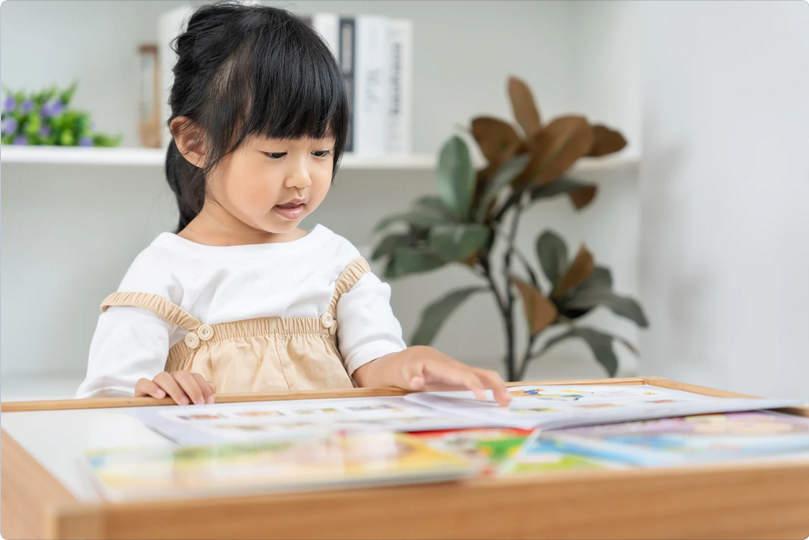
Every parent knows that children grow and learn at different paces.
It’s normal for a child to struggle with certain subjects or skills from time to time, especially as they adjust to new environments at home or school.
But when should their struggles become a point of concern?
For first-time parents or caregivers with busy schedules, it can be easy to overlook these things, especially if they seem minor at the start.
However, when challenges appear repeatedly or persist over time, they may point to something deeper. In some cases, these patterns may even be linked to learning difficulties.
Keep reading to find out more about learning difficulties — what they are, the early signs, and how you can support your child.
What is a Learning Difficulty?
Learning difficulties refer to differences in how the brain processes information. They can affect how a child reads, writes, focuses, remembers, or communicates ideas.
Some children may experience specific learning differences, such as:
- Dyslexia
- Dysgraphia
- Dyscalculia
At the same time, others may have broader conditions. For example, ADHD or autism can affect how they learn and interact in a classroom.
Many children experience occasional academic problems or behavioural challenges, but the key difference often lies in patterns that appear consistently across situations and over time.
Observing these patterns can help parents and educators decide when further support might be helpful.
7 Signs Your Child May Have a Learning Disorder
Before going further, it is important to understand that while your child may exhibit these signs, they do not constitute a diagnosis.
If you have concerns, be sure to consult with a professional.
With that out of the way, let’s get into the 7 early signs that may indicate a child is experiencing learning difficulties!
1. Persistent trouble with reading

Reading is one of the most common areas where learning difficulties first appear.
While many children take time to become confident readers, consistent difficulty with reading may indicate something more than a temporary struggle.
A child who could be experiencing a reading disorder may have trouble with:
- Recognising letters
- Sounding out words
- Understanding simple texts
Dyslexia, for instance, is a well-known learning disorder that affects how the brain processes written language, making it difficult to connect letters to sounds or to recognise familiar words quickly.
However, it is important to remember that not every child who struggles with reading has dyslexia or another learning disorder.
Reading development varies widely, particularly in the early years of school. The key concern is when reading problems continue despite regular practice and instruction.
Want to know more about dyslexia in children? Read our Guide to Signs, Types and Early Detection to gain a better understanding!
2. Difficulty with writing and written expression
Writing requires multiple skills working together.
From forming letters correctly to remembering spelling patterns, writing can be challenging for children with certain learning differences, such as dysgraphia.
Children with dysgraphia may have difficulty with:
- Handwriting
- Spacing between words
- Forming letters clearly
- Spelling
- Struggling to form written sentences with correct grammar and punctuation
Some children may also struggle to express ideas on paper. They might have strong verbal skills but find it difficult to translate thoughts into written sentences.
Again, occasional messy handwriting or spelling mistakes are common during childhood.
The concern arises when writing problems persist over time or seem significantly harder for a child compared to their peers.
3. Challenges with focus and attention

Difficulty with attention is another possible early indicator of learning difficulties.
Some children may appear easily distracted, struggle to stay focused during lessons, or have trouble completing tasks.
ADHD is a condition that can affect attention, impulse control, and organisation.
For example, children with this condition may have trouble sitting still, following multi-step instructions, or managing time during school activities.
At the same time, it’s important to recognise that it’s completely natural for kids to have high energy levels and shorter attention spans.
A child who occasionally loses focus in class does not automatically mean they have ADHD or another condition; the difference lies in whether the pattern occurs across settings and interferes with everyday learning.
4. Difficulty following instructions
Another early sign may be when a child struggles to follow instructions, particularly when tasks involve several steps.
A teacher might ask the class to open a book, read a paragraph, and answer a question. Most children will complete the steps with minimal difficulty.
However, a child with a learning difficulty may forget parts of the instruction, misunderstand what is required, or need repeated reminders.
This type of difficulty with instructions can sometimes be related to challenges with working memory, which allows people to temporarily hold and process information.
When a child has a poor grasp of following instructions, they may find it harder to keep track of multiple directions, ultimately disrupting learning.
5. Struggles with organisation and task management
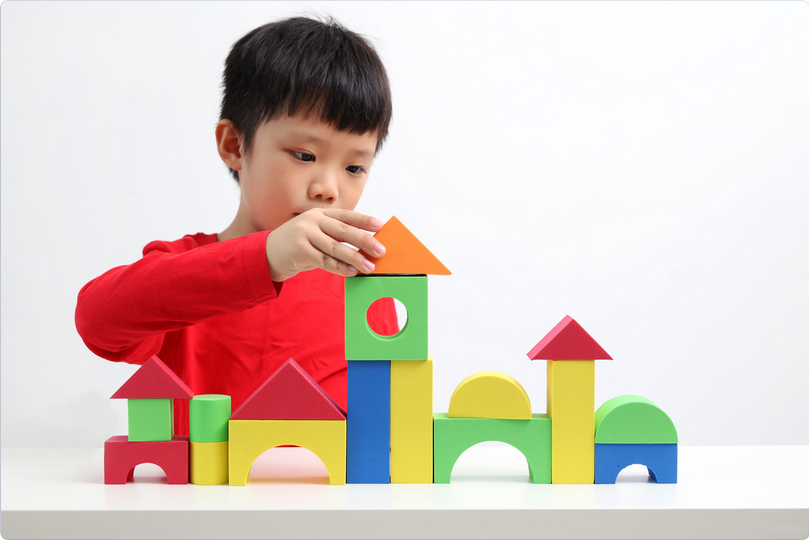
Organisation is an important skill for learning. Some children gradually develop an aptitude for it, while others may need additional support.
A child may start tasks but find them difficult to finish. In other cases, they might lose track of what they are doing or jump from one activity to another without completing anything fully.
These patterns can sometimes be linked to learning disorders that affect executive functioning, which impacts one’s planning, prioritising, and self-monitoring.
When this function is weaker, children may appear disorganised or forgetful even when they are trying their best.
6. Avoids certain learning activities
Children who consistently avoid specific tasks may be signalling that those activities are unusually difficult for them.
Those with learning difficulties may even develop strong emotional responses to schoolwork if they feel they are falling behind their classmates.
For example, a child who struggles with writing might delay starting homework or become upset when asked to complete written assignments.
Avoidant behaviour does not always mean laziness or lack of motivation, though.
In many instances, it reflects frustration or anxiety caused by repeated difficulty. Over time, children may try to protect themselves from embarrassment or failure by avoiding the task altogether.
Recognising these reactions early can help adults provide support before the child loses confidence in their abilities.
7. Differences in spoken and academic skills
Another possible sign is a noticeable gap between a child’s verbal abilities and their academic performance.
Some children are excellent conversationalists. They may explain ideas clearly, ask thoughtful questions, and demonstrate curiosity about the world.
However, when it comes to reading, writing, or structured school tasks, they may experience unexpected problems.
While it can be confusing to think that a child who appears intelligent and capable in conversation may still face genuine learning difficulty in specific academic areas, it does happen.
So when you see this in your own child, try to avoid assuming that they simply need to try harder.
Instead, the focus can shift toward identifying the type of support that may help the child learn more effectively.
Early Observation Matters
Learning difficulties often become more noticeable as academic expectations increase.
For children with learning differences, these increasing demands can make existing challenges more visible.
Early observation, then, allows parents and teachers to recognise when a child may benefit from additional support.
It is also important to remember that there are many types of learning differences.
Some affect reading or writing, while others influence attention, communication, or problem-solving. These can all shape how a student experiences learning.
However, signs can appear differently in each child.
Age, personality, environment, and teaching style can all influence how difficulties show up. What appears at home may look different in a school setting, and vice versa.
Because of this, identifying patterns across multiple situations is often more helpful than focusing on a single incident.
Next Steps for Parents and Educators
Observe carefully

If you notice repeated signs of learning difficulties in your child, the first step is careful observation.
Pay attention to patterns rather than isolated events. Consider the following:
- Whether the difficulty appears consistently
- Whether it affects multiple areas of learning
- Whether it persists over time
Observing these patterns can help determine whether the issue is temporary or related to a learning difficulty.
Speak to teachers
It can also be helpful for you to speak with teachers.
Teachers observe children in a structured learning environment and can provide insight into how a child compares with typical classroom expectations.
They may notice challenges with reading, writing, attention, or organisation that parents do not see at home.
Seek professional assessment
If concerns persist, seeking professional advice may be an appropriate course of action.
Educational psychologists, developmental specialists, and other trained professionals can conduct assessments that help identify possible learning disorders or learning differences.
A professional assessment does not simply label a problem. Instead, it can provide a clearer understanding of a child’s strengths, challenges, and learning style.
This information can guide both educators and parents in creating strategies that support the child’s development.
Focus on support
Learning difficulties do not define a child’s intelligence or potential.
Many people with dyslexia, ADHD, autism, or other types of learning differences can develop successful academic and professional paths when given the right support.
Your child may sometimes feel frustrated or discouraged when school tasks seem harder for them than for their peers, so it’s essential to provide emotional support as well.
Encouraging interests, recognising efforts, and celebrating progress can go a long way in maintaining their confidence during a challenging period.
Turn Your Child’s Learning Difficulties into Strengths with Mandarinstars!
Having a learning difficulty does not mean your child cannot succeed in school. What it just means is that they need a specialised support that suits their needs.
This is where Mandarinstars can help you!
As a Chinese tuition centre, we tailor our tutoring to help children who struggle within the mainstream academic environment due to a variety of learning difficulties.
From dyslexia tuition to Chinese oral classes, we help build the foundation they need to turn from a struggling learner to a confident one.
Want to see the difference in our student-centred classrooms? Contact us today and tackle your child’s learning difficulty head-on!
